Street Racing 3D
- 4.5
- Rating
- 100.00M
- Installs
- Free
- Price

 Analysis by App-foxy
Street Racing 3D is the kind of mobile racing game I can pick up without preparing for a long session. It focuses on street-car competition rather than trying to be a full driving simulator, and that simple approach makes it easy to understand within a few minutes. I tested it with an eye on more than speed: I wanted to see how clearly the game communicates, how comfortable it is during repeated races, and whether its design works in different everyday situations.
My overall impression is positive but specific. This is a free racing game from Ivy with a 4.5 average from around 1.9 million ratings, and its popularity is easy to understand. It offers quick access to driving, a familiar mobile format, and enough tension to make short races feel worthwhile. At the same time, players who want deep simulation, extensive control customization, or a carefully explained progression system may find it limited. Its strongest quality is immediate playability, not technical depth.
How clearly the game presents racing information
I find the racing information easiest to use when I focus on one cue at a time instead of trying to read the whole screen during a turn. That approach helps me separate the immediate driving decision from anything I can check between races, and it can make early attempts feel less frantic. The next section looks at how those visual demands affect comfort, sound, and the way I fit play into a normal day.
You May Also Like

 Blood Strike: 2.5 Anniversary
Blood Strike’s Loadouts Turn Every Drop Into a Tactical Gamble
A close look at Blood Strike’s custom loadouts: how fast access to signature weapons reshapes its battle royale rhythm, rewards preparation, and narrows the gap between fights.

 Pandora - Music & Podcasts
Pandora’s Music Is Easy to Start, but Harder to Recover
Pandora’s strength is its low-effort path from a seed to a station. Its weak spot is how much confidence it asks you to place in connection, setup, and quiet recovery.

 8 Ball Pool
 Is Built on Rivalries, Rematches, and Routine
A close look at the rivalries, rematches, shared routines, and unanswered safety questions that turn a quick pool match into a persistent mobile community.

 Samsung Music
’s Quiet Strength Is Playing What You Already Own
Its reach comes less from spectacle than from dependable access to a personal library. That simplicity is both the app’s strongest retention engine and its ceiling.

 AccuWeather: Weather Radar
AccuWeather Review: A Quick, Clear Forecast for Everyday Decisions
For everyday plans, the best forecast is the one you can understand quickly. AccuWeather makes rain timing, radar, and local conditions easy to act on, with a few trade-offs.

 Hill Climb Racing
Why Hill Climb Racing Still Turns Crashes Into One More Run
A tiny car, a bumpy hill and one more upgrade: Hill Climb Racing keeps resurfacing because its simple chaos makes every near-miss feel personal.
More From Our News Desk
View All News


Readability during a race
The first thing I noticed is that the basic objective is straightforward: stay on the road, control the car, and finish ahead of the opposition. That matters for a mobile game because I do not want to spend my first session studying menus before I can drive. Street Racing 3D communicates its central idea quickly, which makes it approachable for someone who normally avoids racing games.
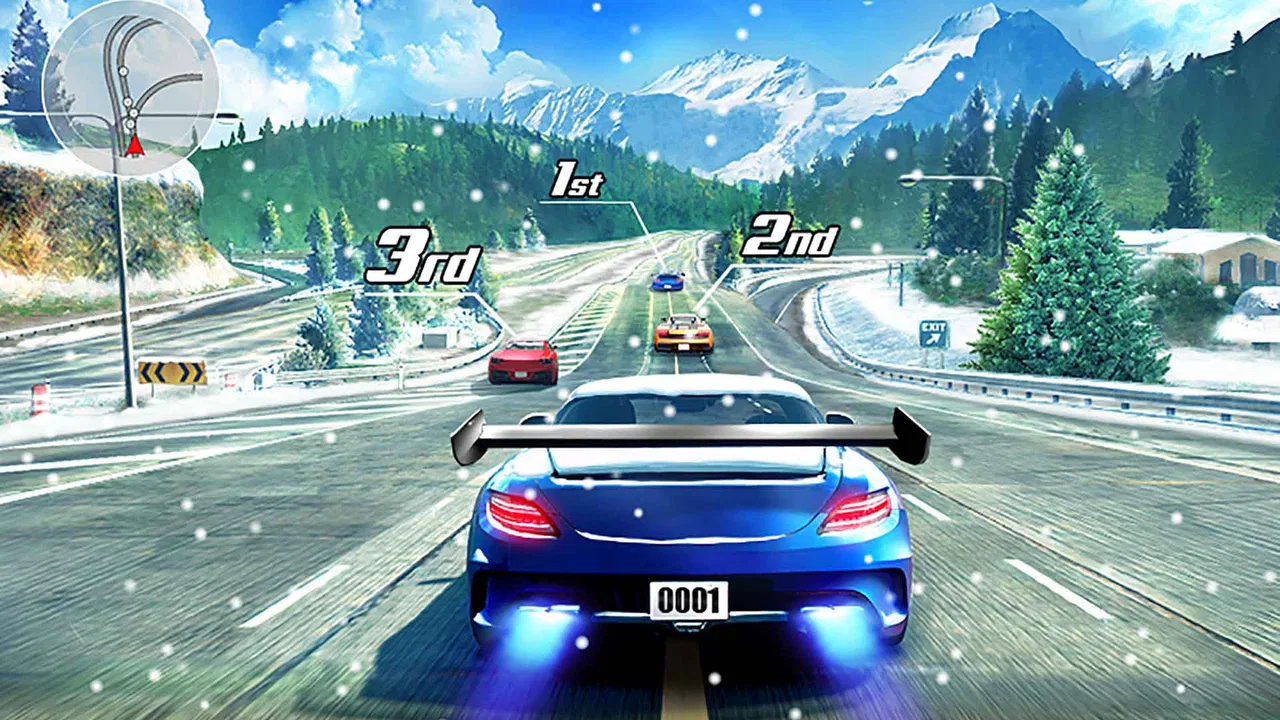
The visual presentation is built around the road and the moving vehicles, so the action has a clear focal point. In practice, that means I can concentrate on steering and timing rather than constantly searching the screen for the next task. This is particularly useful on a smaller phone, where crowded interfaces can make racing feel harder than it needs to be.
Still, visual clarity is not the same as perfect readability. Motion, changing scenery, traffic-like distractions, and the need to react quickly can make a race demanding for players who have difficulty tracking fast movement. I found that a larger screen gives the road more breathing room, while a compact phone makes every turn and visual cue feel more compressed.
The menus are easier to approach when I treat them as part of a short-session game rather than as a large management system. I can return to the main racing loop without feeling that I need to remember a complicated series of steps. That simplicity is a genuine advantage for new players, older users who prefer direct navigation, and anyone who wants a few minutes of entertainment while waiting.
Learning the controls without overthinking them
A useful strength is that the game does not require me to understand real-world vehicle dynamics before I can enjoy it. The driving is presented as an arcade-style challenge, so the learning curve feels more about developing reactions than studying gear ratios or tuning theory. For a first-time player, that makes the opening experience less intimidating than a simulation-focused alternative.
I recommend beginning with short sessions and paying attention to how the car responds before trying to drive aggressively. On a touchscreen, small changes in finger position can produce a different result from what I expect, especially when I am holding the phone one-handed. Using both hands and keeping the device steady gives me more consistent control, even though it is less convenient when travelling.
This is also where the game’s accessibility has a practical limit. Players who need large, widely separated touch targets may find fast driving uncomfortable if the interface feels cramped on their device. I would not choose it for someone who needs highly adjustable controls unless they have already confirmed that the game’s input style suits them.
Progress and decision-making
Street Racing 3D works best when I approach each race as a compact decision-making exercise. I am constantly balancing speed against control: pushing harder can make a race more exciting, but an impatient move can also ruin a run. That creates a small but satisfying rhythm, especially when I replay a section because I know I can improve my result.
One non-obvious tip is to use the early part of a session to learn consistency rather than chasing the fastest possible line immediately. On a touch screen, repeating the same controlled movement helps me understand the game’s response better than making dramatic corrections. This is useful for players with slower reaction times because it turns the experience into a process of building familiarity, not simply reacting to every moment.
The trade-off is that the game’s accessibility comes partly from reducing complexity. A player looking for detailed vehicle setup, realistic braking technique, or a large strategic layer will probably prefer a more advanced racing title. Here, the appeal is the immediacy of getting onto the road, not the depth of a driving school.
Comfort, sensory demands, and everyday use
For me, comfort depends less on how long a race lasts than on whether I start it in a setting where I can concentrate. A steady grip, a screen without glare, and permission to pause matter more here than they would in a slower game. I also think about sound and hand fatigue before settling into repeated runs, which leads naturally to the everyday situations where this game makes the most sense.
Visual and motion considerations
Racing games naturally place more pressure on visual attention than slower genres. Street Racing 3D asks me to watch the road while processing movement, obstacles, opponents, and the changing position of the car. That can be enjoyable when I am alert, but it becomes tiring after repeated races, particularly if I am playing in a moving vehicle or in a bright environment with screen glare.
I get the best experience when the phone is held at a stable angle and the display is free from reflections. This is a simple adjustment, but it makes a noticeable difference: I spend less time squinting and fewer moments correcting a turn because the road was hard to see. Players who are sensitive to rapid motion should also take breaks instead of treating the game as something to play continuously for a long stretch.
The game is rated Everyone 10+, which fits its accessible racing premise, but that does not mean every player will find the visual pace comfortable. Age guidance and sensory comfort are different questions. A younger player may understand the controls while still becoming overwhelmed by speed, sound, or repeated failure. I would introduce it gradually rather than assuming the rating guarantees a comfortable experience for every child.
Sound, attention, and focus
Sound can make a racing game feel more energetic, but it can also be a problem in shared spaces. I often prefer to play with the phone muted when I am in a waiting room, at work during a break, or near someone who is resting. The game remains useful as a visual, short-session activity, although reducing sound can make the action feel less immediate.
Playing without audio also changes how much I rely on visual information. I have to watch the screen more carefully instead of letting sound contribute to my sense of acceleration or impact. That is not necessarily a disadvantage, but it means a player who depends on audio cues may find muted play less comfortable. I would test both approaches in a quiet setting before deciding which is easier.
Another practical point is attention switching. This is not a game I would recommend while walking, crossing a street, or doing another task that requires awareness of the surroundings. A race may be short, but the need to react does not disappear just because the session is brief. For safe use, I keep it for seated moments when I can give the screen my full attention.
One-handed play and physical comfort
One-handed use can be tempting because mobile games are often played casually, but racing puts more strain on that arrangement than a puzzle or card game. I find that one-handed play is best reserved for a quick check-in, while two-handed play gives me better stability and reduces the chance of accidental input. A phone case with a slippery surface can make this more difficult, so a secure grip is worth considering.
Players with limited fine-motor control may appreciate the game’s direct concept, but the pace can still create pressure. The important question is not whether the game is simple to understand; it is whether the player can make repeated touch movements accurately enough to enjoy it. I would avoid judging that from the store summary alone. A short trial is more informative than the number of available cars or races in a description.
For me, the most comfortable routine is to play a few races, put the phone down, and return later. That pattern also helps with frustration. When I keep repeating a difficult section while tired, my corrections become less precise and the game feels harsher than it actually is. Short breaks improve both comfort and performance.
Where it fits into real situations
I get the most value from Street Racing 3D when I have a small, predictable window of free time and can stay seated until I finish or pause. A brief wait can suit it; walking between errands does not, because the game asks me to watch movement and react. With that distinction in mind, the next section weighs the situations where its convenience is useful against the barriers that remain.
A useful game for small pockets of time
I can see Street Racing 3D working well during a bus wait, a short break between appointments, or a quiet evening when I do not want to commit to a long campaign. Its racing focus makes the purpose immediately clear, and I do not need to remember a complicated story before returning to it. That makes it more convenient than a large console-style racing game that expects a longer uninterrupted session.
A realistic example is a commuter sitting at a station with fifteen minutes available. They can play a few races, stop when the train arrives, and return later without having spent the whole break configuring a vehicle. I would still keep the phone away while moving through the station, because the visual concentration required by racing is not compatible with safe navigation.
The game also suits families who want a simple racing option for occasional play, provided the child is comfortable with the controls and the adult checks how in-app purchases are handled on the device. The game itself is free, but optional purchases range from less than a dollar to around a hundred dollars per item. That price range makes parental purchase controls and a conversation about spending sensible, especially on a shared phone.
When another racing game is a better match
I would choose a simulation-oriented racer instead if my priority were realistic handling, detailed setup, or a serious practice environment. Street Racing 3D is better for quick arcade entertainment than for learning how a real car behaves. It can give me a feeling of speed and competition, but I would not use it as a substitute for real driving instruction.
I would also look elsewhere if I wanted a strongly social experience built around communication, organised events, or a deep competitive community. The appeal here is the direct race itself. Players who need extensive online interaction, team systems, or a more elaborate long-term structure may feel that the game does not give them enough to manage.
On the other hand, many larger racing games can be demanding in ways that make them less welcoming. They may require more storage, more time, or more patience with menus and upgrades. Street Racing 3D has a clear advantage for someone who wants to start driving quickly and does not want a complicated simulation. The right choice depends on whether convenience or depth matters more.
Device age and practical expectations
The game supports devices running Android 6.0 or later, which makes it relevant to people who are not using a recent phone. That does not guarantee identical comfort across every device, though. Screen size, touch responsiveness, battery condition, and general performance can all affect how enjoyable a fast racing game feels.
On an older phone, I would close unnecessary apps before playing and avoid judging the game after a single moment of stutter caused by the device rather than the game itself. I would also avoid playing while the phone is already hot. These are ordinary mobile habits, but they matter more in a title where a delayed response can turn a clean race into a frustrating one.
The current version is 7.5.0, so I would keep the installation updated through the normal store process when possible. Updates can be useful for compatibility and stability, but I would not assume that a newer version automatically solves every personal comfort issue. A player who needs different controls or stronger visual adjustments should make that decision based on actual use.
Remaining barriers and the limits of inclusion
I see a clear difference between making a game easy to start and making it comfortable for every player. The direct racing premise lowers the learning burden, but it cannot remove the demands of fast visual tracking and repeated touchscreen input. I also consider spending boundaries part of practical access for families, so the final section looks at who is likely to benefit and who may be better served elsewhere.
What may still make the game difficult
The largest barrier is the combination of speed and touch input. A player may understand every instruction and still struggle because the game demands quick, repeated movements. That is different from a menu problem: clearer navigation cannot fully remove the physical challenge of steering during a fast race.
Visual fatigue is another barrier. The road is the centre of the experience, so anyone who has difficulty distinguishing moving objects, following rapid changes, or maintaining focus on a small display may need a larger screen or shorter sessions. I would not describe the game as broadly adaptable for every visual need. Its core design depends on seeing and reacting to motion.
There is also a financial consideration. The free entry point is helpful, but the presence of optional purchases means that the game is not equally straightforward for every household. A player who wants a completely purchase-free environment may prefer a paid game with no in-app spending, even if that means paying upfront. For families, device-level purchase restrictions are worth setting before handing the phone to a child.
How to make a session more comfortable
I have found three practical habits especially useful. First, I play while seated with both hands available instead of trying to race during movement. Second, I reduce session length when my eyes or hands begin to feel tired rather than forcing one more attempt. Third, I use a stable, glare-free position and test muted play when sound would disturb people nearby.
A fourth tip is to separate learning from performance. During the first few races, I focus on understanding the car’s response and the shape of the road. Only after that do I try to improve speed. This reduces unnecessary frustration and gives players who need more time to process movement a fairer way to build confidence.
These adjustments do not turn the game into a fully customisable accessibility tool. They simply make its existing design easier to approach. That distinction matters: the game can be friendlier in the right context without meeting every need through built-in options.
Who should skip it
I would skip Street Racing 3D if I wanted a calm game with minimal visual motion, a detailed simulation, or a guaranteed distraction-free experience for a child. I would also hesitate if touch controls regularly cause pain or if fast reactions are difficult, because the central racing loop may remain uncomfortable even after changing the playing environment.
It is less suitable for someone who dislikes optional spending prompts or prefers a single upfront purchase. Although the game is free to start, the possible purchase range means that the surrounding device settings and personal spending preferences matter. Players who want a totally controlled budget should consider a different model.
For everyone else, especially people who enjoy quick street-racing sessions without a large learning burden, it is a reasonable choice. The 100M+ install milestone suggests that many players have found the basic format appealing, while the large rating base gives the game a substantial presence among mobile racers. Popularity is not proof that it will suit every player, but it does match my experience that the concept is easy to pick up.
My inclusive verdict after using it
Street Racing 3D succeeds because it gets to the fun quickly. I can open it, understand that I am here to race, and begin learning through play rather than through a long explanation. Ivy has made a game that fits short mobile sessions and gives casual racing fans a clear starting point. The free price also lowers the risk of trying it, although the optional purchase range means families and budget-conscious players should set boundaries in advance.
From an inclusive-use perspective, I would call it approachable but not universally adaptable. The straightforward racing concept helps people who prefer simple navigation, and the short-session format works well in many everyday contexts. However, fast visual movement, touchscreen precision, and the need for sustained attention remain real barriers. Those limitations are part of the game’s identity, not small details that every player can solve with a setting.
My final recommendation is therefore conditional. Try it if you want an accessible entry into street racing, enjoy arcade-style competition, and can comfortably follow moving action on a phone. Choose a deeper simulator for realistic driving, a calmer game for low-stimulation play, or a different business model if optional purchases are a concern. Street Racing 3D is at its best as a quick, uncomplicated racing break, and that is a worthwhile role when it matches your abilities, device, and expectations.
If I were recommending it to a friend, I would say to install it for short seated sessions, begin slowly, and judge the touch response on your own phone rather than relying only on its strong reputation. The game is rated Everyone 10+, was released on Aug 10, 2017, and remains a free racing option for Android users on compatible devices. Those details make it easy to try, but the real decision comes down to one question: does its fast, direct control style feel comfortable for you?
For me, the answer is yes in moderation. I enjoy the immediate races and the low barrier to entry, but I would not mistake that convenience for comprehensive accessibility or simulation depth. Used with sensible breaks, a secure grip, and clear spending limits, it offers an enjoyable way to fill a few spare minutes without demanding a major commitment.
FAQs for Street Racing 3D
01What devices are compatible with Street Racing 3D?
Street Racing 3D is available for both Android and iOS devices. It requires Android version 4.1 and up or iOS 9.0 or later. Ensure your device meets these requirements for optimal performance. Additionally, a stable internet connection enhances the gaming experience, particularly for multiplayer modes.
02Is Street Racing 3D free to play?
Yes, Street Racing 3D is free to download and play. However, it includes in-app purchases that allow players to buy items like cars, upgrades, and cosmetic features. These purchases can enhance your gaming experience, but they are entirely optional. Players can still enjoy and progress in the game without spending money.
03Does Street Racing 3D have multiplayer features?
Street Racing 3D offers robust multiplayer features, allowing you to race against friends or players from around the world. The game includes a leaderboard system, where you can compete for top rankings. Make sure you have a stable internet connection to enjoy seamless multiplayer gameplay.
04How can I upgrade my car in Street Racing 3D?
In Street Racing 3D, you can upgrade your car by earning coins and diamonds through races or special events. These currencies can be used to enhance your car's speed, handling, and nitro capabilities. Regularly upgrading your vehicle is crucial to staying competitive in higher-level races.
05Are there any ads in Street Racing 3D?
Street Racing 3D does contain ads, as it is a free-to-play game. Ads help support the developers. However, if you find ads disruptive, you may have the option to remove them through in-app purchases. This allows for an uninterrupted gaming experience, ideal for those who prefer ad-free gameplay.
Pros
- Stunning graphics with realistic environments.
- Wide variety of customizable cars available.
- Smooth controls enhance gameplay experience.
- Exciting multiplayer mode adds competition.
- Regular updates keep content fresh.
Cons
- In-app purchases can be expensive.
- Occasional ads disrupt gameplay flow.
- Limited offline features available.
- Battery consumption is relatively high.
- Can be repetitive without new challenges.

Street Racing 3D
Gallery